Published · 6 min read
How to Start Collecting Photography: A Practical Guide
What makes a photograph collectable, the print processes worth knowing, where to look in France, how to give a collection a thread and how to buy online.
Photography is the medium most people already understand before they buy anything. Everyone has looked at thousands of photographs; far fewer have looked hard at a single one on a wall. That familiarity is the reason it makes such a good first collecting medium — and also the trap, because the difference between a collectable photograph and a nice picture is almost never visible on a screen.
This guide is about the first few purchases: what to check, what the words on a listing mean, where to look, and how to keep a print in good condition once it is home.
Why photography is a good way in
Three things make photography unusually accessible. It is editioned, so the cost of a work is spread across a capped number of prints rather than carried by one unique object. It comes in modest formats that fit an ordinary flat and a single wall. And it is easy to live with: a photograph asks less of a room than a large painting, and several can hang together without fighting.
The ranges this site uses as typical for photography in France run from about €150 to €5,000, and from about €120 to €4,000 for black-and-white work specifically. Those are broad bands, not valuations, and signed editioned work by less established photographers can sit below them. The point is that the entry to the medium is not a gatekept one.
What makes a print collectable
A photograph becomes a collectable object through the paperwork and the physical print, not the image. Before buying, you want clear answers on five points:
- Edition size. How many prints of this image, at this size, exist or will ever exist. An open edition is a reproduction; a capped edition is a collectable. The limited-editions guide on this site covers the numbering in detail.
- Signature. Who signed, and where — on the front margin, on the back, or only on a label. A hand signature by the photographer is the usual expectation for contemporary work.
- Certificate. A certificate of authenticity that states the edition number, signed by the artist or the publisher, travels with the print for as long as you own it and afterwards.
- Paper. The support affects how the print looks, how it ages and how it should be framed. A listing that names the paper is more useful than one that says nothing.
- Print date. When the print was made, as opposed to when the photograph was taken. For contemporary work the two are usually close; for older images the distinction is everything.
Vintage and later prints
A vintage print is one made close to the time the image was taken, commonly by the photographer or under their supervision. A later print is made years afterwards from the same negative or file. The picture can be identical and the two objects still be valued very differently. When a listing does not say which one you are looking at, ask — and treat an answer that is vague as an answer.
Print processes, in general terms
You do not need to be a technician, but three terms come up constantly:
- Gelatin silver print. The traditional black-and-white darkroom print, made on paper coated with a light-sensitive silver emulsion, and the process behind most historical black-and-white photography.
- C-print (chromogenic print). The standard colour photographic print, made by exposing colour photographic paper to light and developing it chemically.
- Pigment print. Often sold as a "fine art" or inkjet print: pigment inks laid onto paper, frequently on cotton or other archival papers. Now the most common process for contemporary editions.
No process is better in the abstract. What matters is that the seller tells you which one it is, and that it is consistent across the edition. If a listing only describes the paper, it is reasonable to ask about the process.
Where to see and buy photography in France
Look before you buy, and look a lot. Galleries that show photography, museum exhibitions and photography festivals are free or cheap training for the eye, and they are where you learn what a well-made print looks like at arm's length.
Two events stand out in the calendar covered by this site's city guides: Paris Photo, the photography fair in Paris, and Visa pour l'Image in Perpignan. A fair lets you compare many galleries' prints in one afternoon; a festival is mainly for looking, and the follow-up with a gallery can come later. Between events, the city guides on this site list the galleries and institutions in each city.
Give the collection a thread
Three prints bought at random are three prints. Three prints that share something are the start of a collection. The thread can be chosen after the first purchase rather than before, and the most workable ones for photography are:
- A subject. The sea, mountains, empty interiors, people alone in a landscape.
- One photographer. Following a single body of work over time, which also teaches you how a photographer's eye develops.
- Black and white. The classic choice, and the one that holds together on a wall almost without effort.
Threads can also cross. At ArtMarket, the shop this site links to, Serena's Fading Steps is a black-and-white image of a single footprint in the sand as an incoming wave erases it, and Bonaque's The Watchful Raven shows a raven on a dead branch against a snow-covered landscape with clouded mountains behind. Both are monochrome; place LumièreVue's The Last Light on the Peak, a colour image of a mountain lit gold at sunset under a violet sky, beside the raven and the thread becomes mountains rather than black and white.
Buying online safely
A screen flattens every photograph to the same size and the same surface, so the listing has to do the work the wall would have done. Before paying, check:
- Dimensions — of the image and of the paper, in centimetres.
- Edition — the total run and, ideally, which number you will receive.
- Signature and certificate — stated explicitly, not implied by a photograph of a signed print.
- A proper invoice — naming the work, the artist, the edition and the price. Keep it with the certificate.
- Shipping — how the print travels, from where, at what cost, and whether it arrives framed.
As an example of a complete listing: the photographs on ArtMarket are hand-signed, in editions of 25, with a signed certificate stating the edition number, printed on premium photographic paper at 40 × 30 cm (€65 or €95 depending on the work), with a 60 × 40 cm size printed to order. They ship unframed, rolled in a tube, from the Netherlands, and delivery to France is €18.
Caring for prints
A print that arrives rolled should be unrolled gently and left to flatten under light, even weight between clean sheets before framing. Handle photographs by the edges, with clean dry hands, and frame them with acid-free materials.
After that, the rules are the ones in this site's hanging guide. Keep prints out of direct sunlight, which fades them irreversibly. Aim for a stable 18–22 °C and 40–60% relative humidity, which is an ordinary living room — not a bathroom, an attic or the wall above a radiator. Light them with LED at a CRI above 90, and if you own more prints than walls, rotate them: a photograph that spends part of its life flat in a drawer, in the dark, lasts longer than one that never comes down.
Works mentioned in this guide
Signed, limited-edition photographs listed on ArtMarket, our commercial partner — for when the reading turns into wanting a real print.
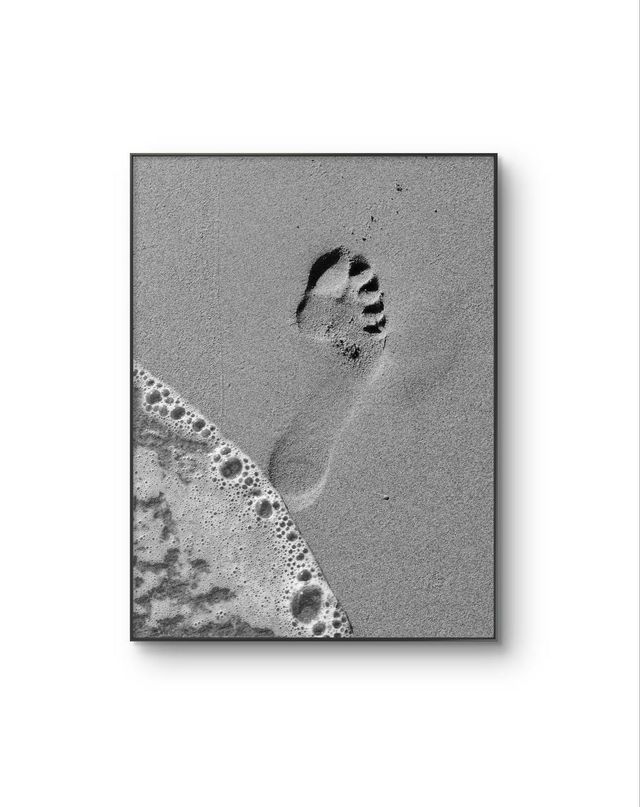
Fading Steps
Serena
Black & white photography · Edition of 25 · Signed
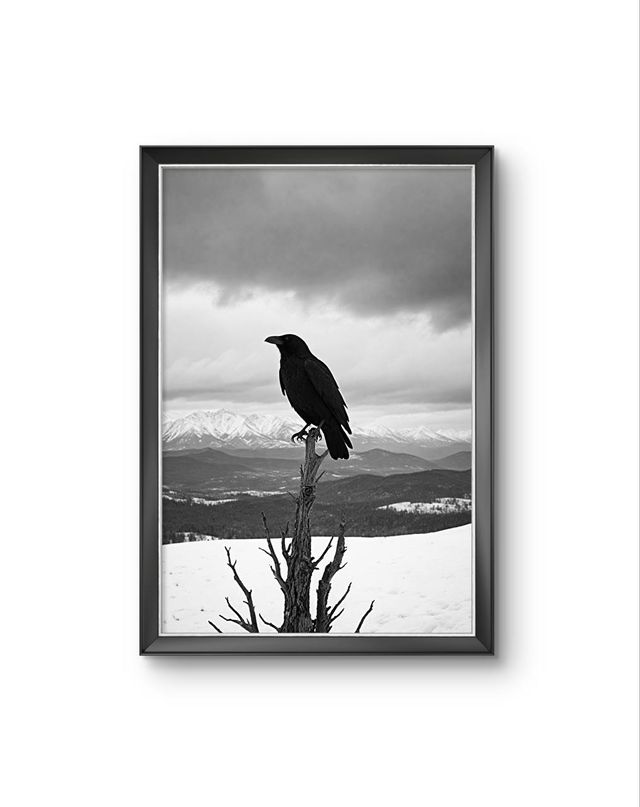
The Watchful Raven
Bonaque
Black & white photography · Edition of 25 · Signed
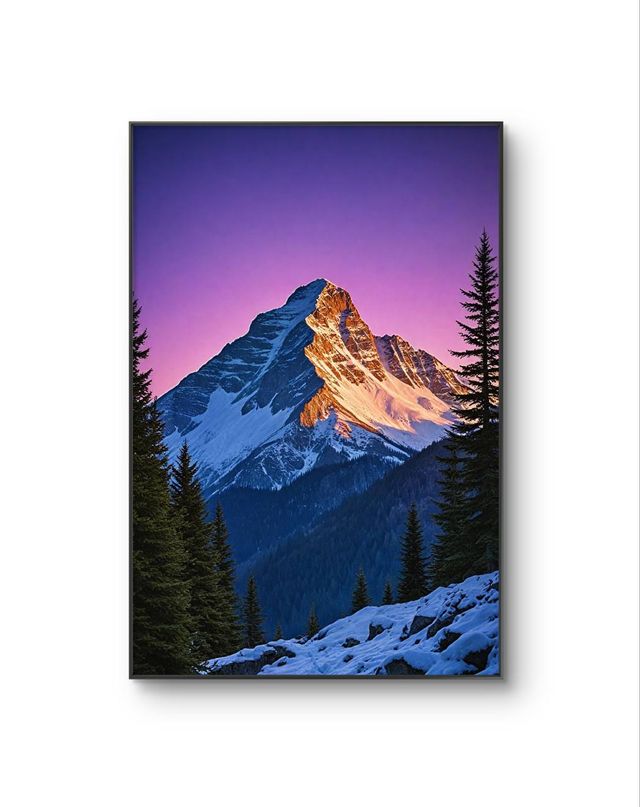
The Last Light on the Peak
LumièreVue
Colour photography · Edition of 25 · Signed
Listed on ArtMarket, our commercial partner. Edition details and pricing are on their site.
Continue reading
- Limited Edition Prints Explained: What 1/9 Actually MeansThe fraction on a print is the single most important thing on it. What edition numbers mean, where the signature goes, and what AP and EA are for.
- Original or Limited Edition? How to Choose What to BuyUnique work, numbered edition or open reproduction: what each one is, how each is priced, what paperwork to expect, and which suits your budget.
- Giclée, Lithograph, Screenprint: Print Types ExplainedThe word “print” covers a stone lithograph, a screenprint, an etching, a pigment print and a poster. How to tell them apart, and what each is worth.