Published · 8 min read
How to Hang Art at Home: Height, Light and Grouping
Hanging height, the walls to avoid, how to light a print without cooking it, and how to build a group that holds together — plus fixings for French walls.
More collections are spoiled by hanging than by buying. A good work hung too high, lit by nothing, on the one wall in the flat that gets four hours of afternoon sun, looks like a mistake and slowly becomes one. None of what follows is difficult, and most of it costs nothing.
The height rule
Hang so that the centre of the work sits between 145 and 150 cm from the floor. This is roughly the museum standard across Europe and it is not arbitrary: it puts the middle of the image at the eye level of a standing adult of average height.
The instinct almost everyone has is to hang higher, usually by fifteen or twenty centimetres, because the eye reads the wall above furniture as empty and wants to fill it. Resist it. Art hung high addresses nobody and floats.
Two adjustments are legitimate. In a room where people mostly sit — a dining room, a reading corner — drop the centre to about 140 cm. And when several works of different sizes hang together, it is the centre of the whole group that goes at 145–150 cm, not the centre of each piece.
Relating art to furniture
Above a sofa, sideboard or bed, the work belongs to the furniture rather than to the wall, and two proportions do the work:
- Leave 15 to 20 cm between the top of the furniture and the bottom of the frame. Less and it looks stuck on; more and the two stop reading as a pair.
- Aim for about two thirds of the furniture's width, whether that is one large work or a group treated as one block. A single small print over a three-seat sofa is the most common hanging mistake there is.
Small work is not the problem — an isolated small work on a large wall is. Give it a group, a narrow wall, or a spot where it is seen from close up: a corridor, the side of a bookcase, above a desk.
Walls to avoid entirely
Before measuring anything, rule out the places where a work on paper will visibly degrade:
- Any wall in direct sunlight. This is the single largest cause of fading, and it is irreversible. UV glazing slows it; it does not stop it. If the only available wall gets sun, hang something you can replace there.
- Above a radiator. Rising heat and the dry air above it will cook the paper and buckle the mount within a season.
- Above a fireplace in use. The classic spot is the worst one: heat, soot and smoke. Fine for a mirror, bad for a photograph.
- Bathrooms and kitchens. Humidity swings and cooking grease. If you must, seal the frame properly and accept the risk.
- Cold exterior walls in older buildings. Condensation forms behind the frame and mould follows. Leave an air gap with small cork pads on the bottom corners, or choose an internal wall.
The stable target is ordinary and easy to meet: 18–22 °C, relative humidity 40–60%, away from direct light. That is a normal living room. It is not a sunny window, an attic, or an unheated second home in winter.
Lighting
Most home lighting flattens art, and the fix is a matter of angle. Aim a light so it strikes the work at about 30° from vertical. Steeper and the frame casts a shadow across the image; shallower and the glazing throws the bulb straight back at you.
Three specifications matter when choosing the lamp:
- LED, always. Halogen puts heat and UV onto the work from half a metre away.
- CRI above 90. Colour rendering index — below 90, colours go muddy and greys pick up a tint. It is the number that most affects how the work actually looks.
- 2700–3000 K in a living room, warm and consistent with the rest of the lighting. Mixing colour temperatures on one wall is more visible than people expect.
Anti-reflective glazing changes a lit wall completely, and it is the upgrade most worth its cost after acid-free mounting. Standard glass in a lamp-lit room shows you the room; museum glass shows you the work.
Building a group that holds together
A grouped wall is not several works near each other. It is one composition, and it needs one organising principle chosen in advance:
- The grid. Identical frames, identical spacing, in rows and columns. Effortlessly good with editioned prints of one size — the 40 × 30 format sits particularly well in a row of three or a block of six — and forgiving of very different images.
- The shared axis. Mixed sizes aligned on one invisible horizontal line running through the centre of every work. Looser than a grid, still disciplined.
- The anchor. One large piece slightly off-centre, with smaller works clustered around it. The freest arrangement and the hardest, because it has to be balanced by eye.
Whichever you choose: keep gaps between 5 and 8 cm and keep them equal. Uneven spacing is what makes a gallery wall look accidental, and it is more noticeable than any individual choice of image.
Do the layout on the floor first, then cut paper rectangles the size of each frame and tape them to the wall for a day before drilling. Ten minutes of paper saves twenty holes and the afternoon spent filling them.
Fixings, and what French walls are actually made of
The wall decides the hardware, and in France you will meet three:
- Plasterboard (placo). Standard in modern build and renovation. A nail hook holds a light frame; anything above about 5 kg needs a proper expanding anchor (cheville Molly), which requires the right tool and is worth the trouble.
- Lath and plaster, old plaster over rubble. Common in pre-war buildings and unpredictable — the drill either sails through or hits stone. Drill without hammer action first, and spread the load across two fixings rather than trusting one.
- Stone or solid brick. Hammer drill, masonry bit, nylon plug. Solid, but assume you will not be moving the hole.
Two things worth knowing. Anything heavy, and anything you expect to rearrange, is better on a French cleat — two interlocking bevelled battens — which spreads the weight and lets the work slide sideways to level itself.
And if you rent, or live in a Haussmann-era flat, look up: many have a picture rail (cimaise) running around the room below the cornice. Hanging from it with cord or rod means zero holes, unlimited rearrangement, and no argument at the end of the lease. Where there is no rail, a modern surface-mounted one costs little and pays for itself the first time you change your mind.
Use two hooks rather than one wherever the frame allows. A work on a single hook rotates every time a door slams, and you will spend the next five years straightening it.
Living with it
Dust the glazing, never the work, and never spray anything directly at a frame — liquid runs down inside the glass and reaches the mat. Spray a soft cloth instead, and skip alcohol-based cleaners entirely on anti-reflective coatings.
Check the hanging hardware once a year; picture wire and D-rings fail slowly and then all at once. And rotate works on paper if you have more than you can hang, giving each a rest from the light. A print that spends half its life in a drawer, flat and in the dark, will outlast one that never leaves the wall — and swapping the wall around every few months is one of the quiet pleasures of owning several pieces rather than one.
Discover similar artwork
Signed, limited-edition photographs listed on ArtMarket, our commercial partner — for when the reading turns into wanting a real print.
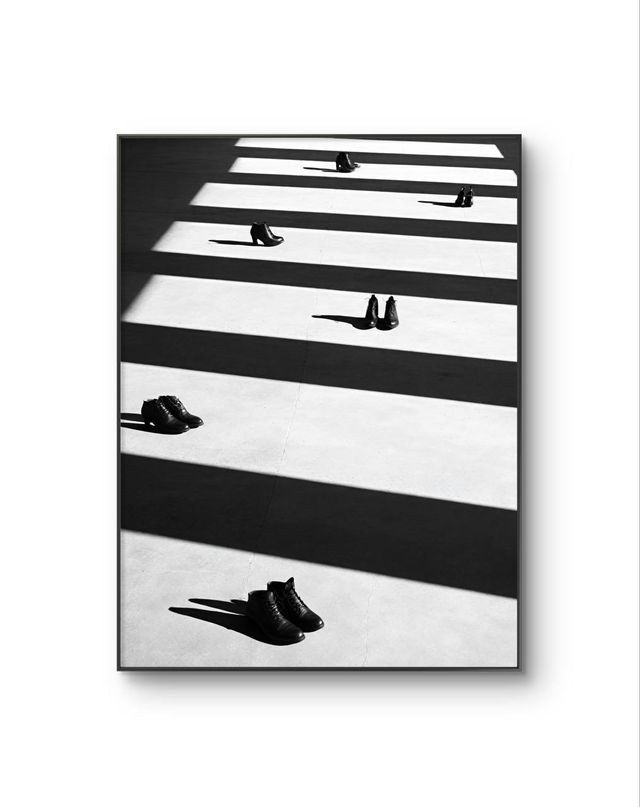
Traces of the Unseen
Serena
Black & white photography · Edition of 25 · Signed
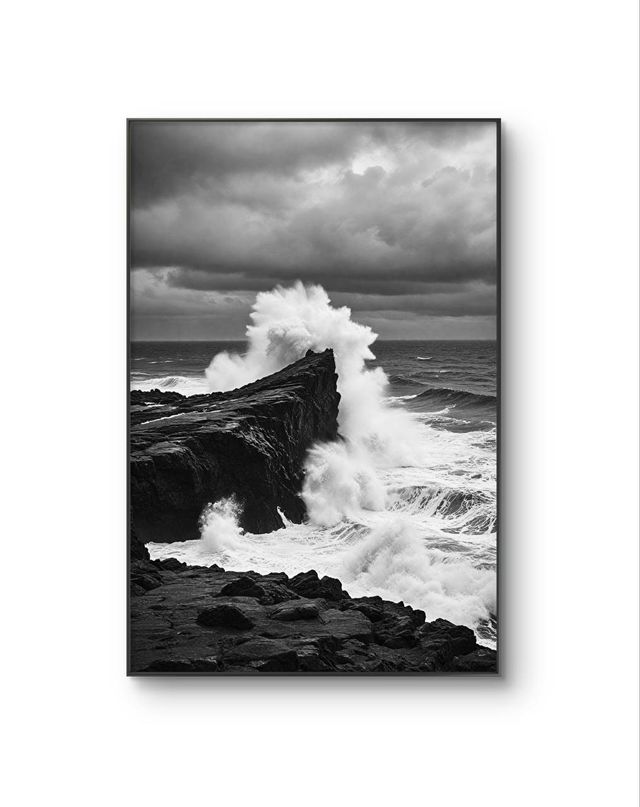
The Clash of Titans
LumièreVue
Black & white photography · Edition of 25 · Signed
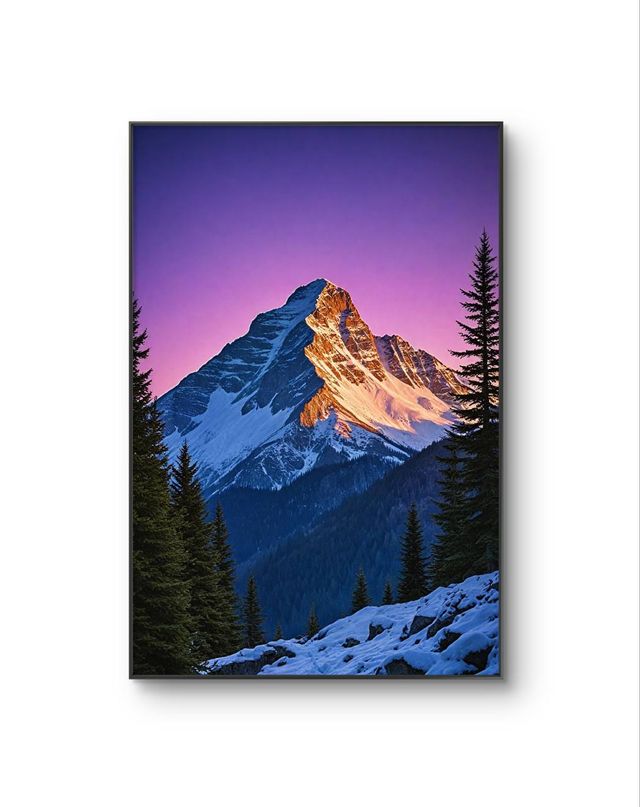
The Last Light on the Peak
LumièreVue
Colour photography · Edition of 25 · Signed
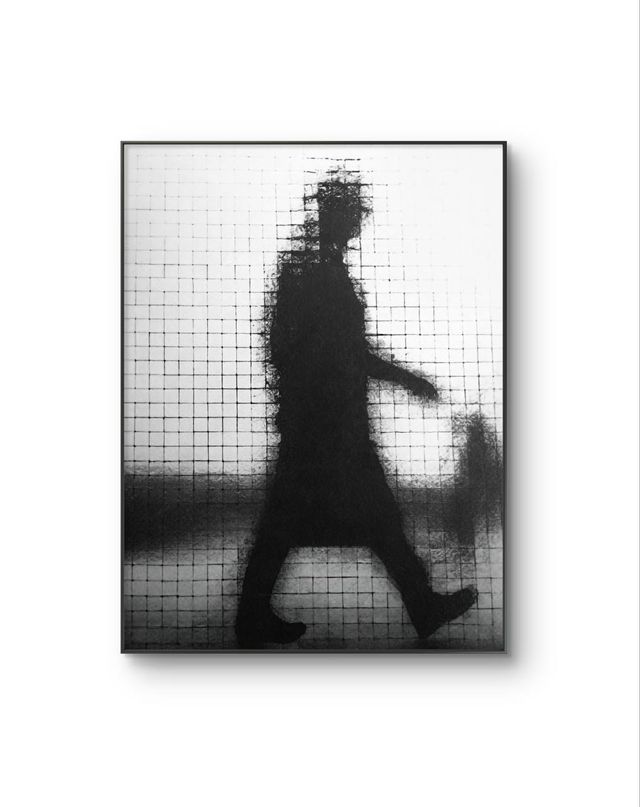
Fractured Passage
Serena
Black & white photography · Edition of 25 · Signed
Listed on ArtMarket, our commercial partner. Edition details and pricing are on their site.
Continue reading
- How to Choose Art for Your Home: Wall, Scale and MoodStart from the wall, not the artist: scale against furniture, mood room by room, colour or black and white, light, framing costs and living with a work first.
- Art for a Mediterranean Home: Light, Walls and SubjectsSouthern light, sea air, lime-washed walls and houses shut for the winter: how to choose, place and protect art in a Mediterranean home.
- How to Choose the Right Size of Artwork for Your WallMeasure the wall, relate the work to the furniture, count the mat and frame, test with paper — a practical method for choosing the right artwork size.