Published · 6 min read
Original or Limited Edition? How to Choose What to Buy
Unique work, numbered edition or open reproduction: what each one is, how each is priced, what paperwork to expect, and which suits your budget.
Most people who set out to buy their first real artwork arrive at the same fork without quite noticing it. On one side is the unique object: a painting, a drawing, a sculpture that exists once. On the other is the edition: a print or a photograph made in a fixed number of identical copies. And running alongside both, often in the same shop and sometimes in the same listing, is the reproduction, which can be made as many times as anyone wants to buy it.
These are three different products. They are priced differently, documented differently and they age differently in your hands. Choosing well is mostly a matter of knowing which one you are looking at and which one you actually want.
Three categories, not two
A unique work is one of one. There is no second copy, and if it is damaged or lost the image is gone. Painting, drawing, collage, most sculpture and ceramics sit here.
A limited edition is a set number of copies, each signed and numbered, with an undertaking that the run will not be extended. The fraction on the print tells you the size of that run and which copy you hold.
An open edition or reproduction has no fixed total. Posters, museum shop prints and most decorative prints belong here. So does the high-quality inkjet print of a painting, often sold as a "giclée reproduction": the technique can be excellent, but the object is a copy of a work that exists elsewhere.
The useful question is not "unique or multiple?" but "is this an original, and if it is multiple, is the number fixed?"
Why an edition can still be an original
This is the point that trips people up. For some media, the multiple is the work. A photographer's final print, made from their own negative or file, at a size and on a paper they chose, is not a copy of some other object. There is no "real" version hanging somewhere else. The same is true of a lithograph or an etching conceived for the plate: the printed sheet is what the artist made.
So a signed, numbered photograph can be an original in editioned form, and a lavish giclée of a famous painting is not, however fine the printing. The test is simple: does an original of this image exist in another medium? If it does, you are buying a reproduction of it.
Reading the edition
An edition is identified by the fraction written by hand on the print or its certificate: the copy number over the total. Alongside the numbered run there are often a small number of artist's proofs, marked AP or EA, kept outside the count. They are not flaws and not upgrades; they simply add to the number of copies in circulation, so it is reasonable to ask how many exist.
The detail that matters most is the total. It should be a single figure across all sizes and papers, or the seller should say clearly that it is not.
How to spot a reproduction presented as something more
- No number, or a very large one. "Limited edition of 500" is a print run. At that number the word limited is doing no work.
- A signature inside the image. A signature reproduced as part of the picture appears identically on every copy and certifies nothing.
- "After" the artist. In English or French (d'après), it means someone else reproduced the work.
- A regular dot pattern under a loupe. That is commercial offset printing, the process behind posters and books.
- Vague answers about the source. If nobody will say whether a painting or drawing of the image exists, assume it does.
None of this makes a reproduction a bad purchase. A good poster in a good frame is a perfectly sensible thing to own. It just should not be priced like an original.
How the price logic differs
The same few principles run through every price band. A unique object prices above a reproducible one, which is why painting and sculpture generally sit above prints and photography at comparable levels of artist and size. Within editions, the edition size does most of the work: a small run is scarcer than a large one, and the market usually treats it accordingly. An open edition is priced as what it is, a reproduction.
Two other figures are worth reading carefully. A crossed-out "original price" records what a work was first offered at; it is not a valuation. And a seller's "estimated value" is the seller's own figure, not an independent appraisal, whoever the seller is.
A worked example: editions of 25
The signed photographs on ArtMarket, the shop this site links to, give a concrete sense of how an edition is set up at the accessible end of the market. The listings cover twenty photographs by Serena, Bonaque and LumièreVue. Each is hand-signed, editioned at 25, and comes with a signed certificate stating the edition number; the listings state that a finished run is not reprinted. They are printed on premium photographic paper at 40 × 30 cm, at €65 for most works and €95 for three, with a 60 × 40 cm size printed to order.
Two examples show the range. Bonaque's Journey Through the Winter Silence, at €65, is a black-and-white scene of two figures in a horse-drawn sleigh crossing untouched snow beneath cloud-covered mountains. Serena's Infinite Reflection, at €95, is a monochrome work built on a silhouette within a silhouette: a faceless figure in a bowler hat against the sea, his form carved out of a larger one.
What the example illustrates is the structure rather than the specific works: a known total, a hand signature on each copy, a certificate that names the number, and a stated commitment not to reprint. Those are the four things to look for in any edition, at any price.
What paperwork to expect
For a unique work: a certificate stating artist, title, year, medium, dimensions and the issuer's name and signature, plus a detailed invoice that describes the work rather than listing "artwork". Of the two, the invoice is often the more useful record.
For a limited edition: everything above, plus the edition number and total, and ideally the number of proofs outside the edition. The number on the certificate should match the number on the print.
For an open edition or reproduction: an ordinary receipt. A certificate attached to an unlimited print has very little to certify, and sometimes exists mainly to suggest collectability.
Which suits which buyer
- A tight budget and a wish for a real object: a signed, numbered edition from a small run. It is commonly the most accessible way to own an original.
- Filling a large wall for little money: a well-made reproduction or poster, bought as decoration and priced as decoration.
- Wanting the only one: a unique work, which usually means a higher budget or smaller formats such as drawings and works on paper.
- Wanting to support an artist directly: an original or an artist-published edition. A reproduction of a well-known painting generally does not do this.
A word on resale
Nothing here is investment advice. Most art, unique or editioned, does not resell for more than its purchase price, and some cannot easily be resold at all. As a general rule, documented originals and small signed editions are easier to describe to a future buyer than open reproductions, which rarely have a secondary market. That is a point about paperwork and clarity, not a forecast. Buy what you want to live with; treat anything else as a bonus that may never arrive.
Works mentioned in this guide
Signed, limited-edition photographs listed on ArtMarket, our commercial partner — for when the reading turns into wanting a real print.
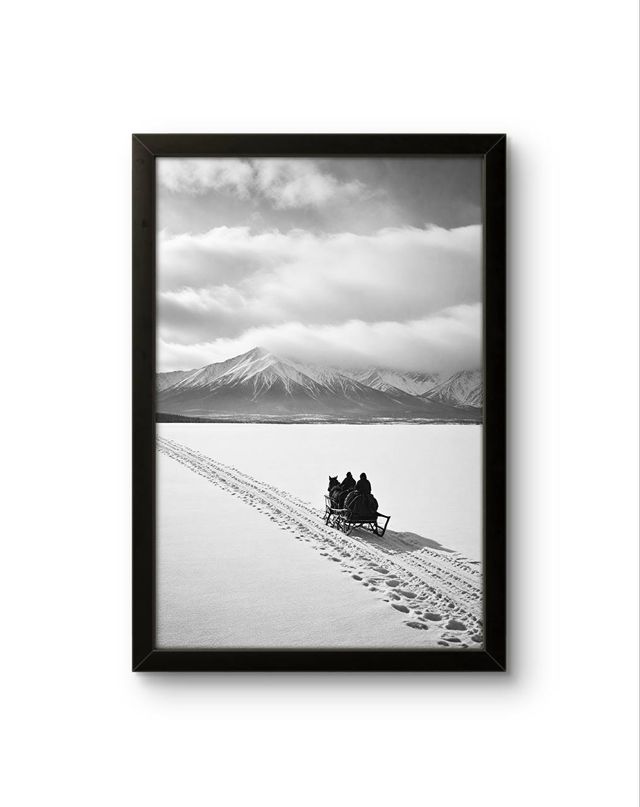
Journey Through the Winter Silence
Bonaque
Black & white photography · Edition of 25 · Signed
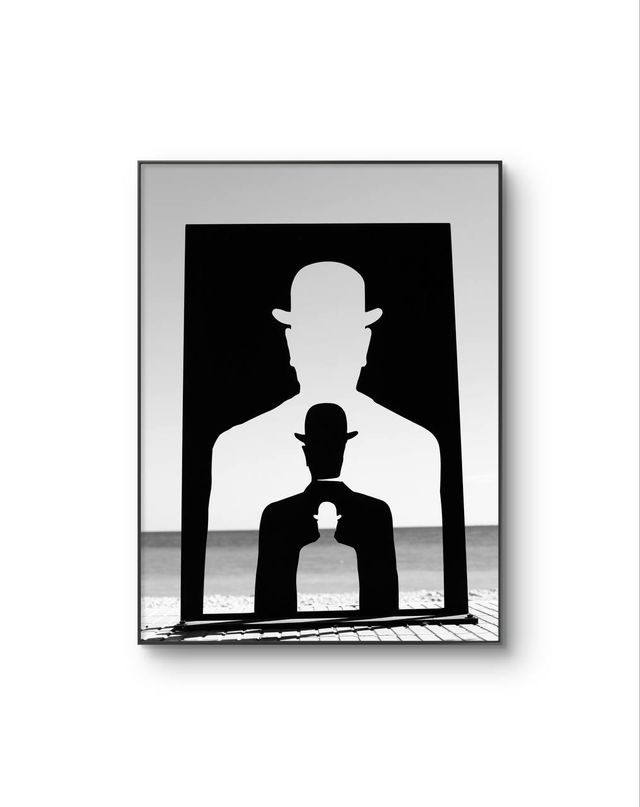
Infinite Reflection
Serena
Black & white photography · Edition of 25 · Signed
Listed on ArtMarket, our commercial partner. Edition details and pricing are on their site.
Continue reading
- How to Start Collecting Photography: A Practical GuideWhat makes a photograph collectable, the print processes worth knowing, where to look in France, how to give a collection a thread and how to buy online.
- Buying Art Online Without Regretting ItWhat a photograph cannot tell you, what a listing must state, and how art actually travels. The practical checks before you pay, and what to do on delivery.
- Certificates of Authenticity: What They Prove and What They Do NotA certificate is only as good as what it states and who signed it. What belongs on one, why the invoice matters just as much, and when to walk away.