Published · 5 min read
How Much to Spend on Your First Artwork
Set a figure you are content to have simply spent, see what each price band buys in France, and count framing, shipping and paperwork before you pay.
The first purchase is the one people put off longest, and the question that stalls it is almost always the same: how much is the right amount? There is no correct figure. There is, however, a sensible way to arrive at yours, and a short list of costs that rarely appear on the price tag.
Start with a number you are content to have spent
The useful question is not what a work might be worth later. It is what you would be comfortable paying for something you will look at every day and may never sell. Treat the figure as spent, the way you would a good holiday or a piece of furniture you intend to keep. Art bought as an investment tends to be chosen for the wrong reasons, and nobody can reliably tell you which works will rise in value. This site does not try to.
Once you have that number, work backwards from it. The price of the work is only part of the total, and the gap between the two is largest at the cheapest end of the market.
What each band realistically buys in France
These are the same broad bands this site uses in its price guide. They describe where most of the market sits, not its limits.
Under €100
Signed, numbered photography and printmaking. A capped, signed edition at this price is a genuinely collectable object rather than a consolation. ArtMarket, the shop this site links to, sells photographs in exactly this band: hand-signed, in editions of 25, printed at 40 × 30 cm on premium photographic paper, with a signed certificate stating the edition number, at €65 or €95. Serena's Fading Steps (€65) shows a single footprint in the sand as an incoming wave erases it; LumièreVue's The Sentinel of Ice and Rock (€65) is a jagged, weathered peak with snow clinging to its ridges; Serena's Solitary Palm (€95) is a lone palm in stark monochrome against an open sky.
€100 to €300, and up to €500
Larger formats of editioned prints, then original works on paper, drawings and the upper end of art photography. Towards €500 you begin to buy something unique rather than one of an edition, often at graduate shows, open studios and smaller galleries. As an example of the lower end: the same photographs printed to order at 60 × 40 cm cost €80 more (€100 more on the €95 works).
€500 to €2,000
Original paintings by emerging and early-career artists at a size that can hold a wall on its own, plus small sculpture and ceramics.
€2,000 and above
Mid-career and established artists, large canvases and work with an exhibition history. Above roughly €5,000, provenance documentation should come as a matter of course rather than on request.
The full cost of owning a work
Add these to the price before deciding what you can afford:
- Framing. Prints usually arrive unframed. Proper conservation framing, with an acid-free mat and UV glazing, frequently costs more than an affordable print did. On a first purchase under €100, it can double the total.
- Shipping. Works on paper generally travel rolled in a tube. The photographs above ship this way from the Netherlands, with delivery to France at €18 and free shipping within the EU above €175. A single €65 print therefore costs €83 delivered, before framing.
- Insurance. Largely irrelevant for a print, worth thinking about once a work runs to several thousand euros. Check whether your home policy covers art, and up to what value.
- Hanging. Hooks and a spirit level for small work; for a large or heavy piece, possibly a professional.
One better work or several cheaper ones?
Both are defensible, and the choice depends on what you want the purchase to do. Several affordable prints teach you your taste quickly, and living with three different images tells you more than a year of deliberating over one. A single stronger work, bought once you know what you respond to, tends to hold a room better and to stay loved longer.
A reasonable compromise for a first purchase is to buy once in the lowest band, frame it properly, and live with it for a while before deciding whether the next step is another print or a first unique work. If a larger print tempts you, one confident size often does more for a room than two hesitant ones.
Where you buy changes the price
The same work can cost different amounts depending on the route.
- Galleries take a substantial commission, and in return you get selection, an invoice, a certificate and someone to ask questions of years later.
- Art fairs are excellent for seeing a lot of work quickly, but prices carry the cost of the stand and there is little room to negotiate.
- Online offers the widest choice and lower overheads. You are judging from a photograph, so the listing has to state dimensions, medium, edition and signature clearly.
- Studios can be cheaper, but an artist with gallery representation will usually, and rightly, refer you back to the gallery.
Negotiating without awkwardness
A modest discount is sometimes offered to a serious buyer, and more often on a second purchase than a first. Ask once, politely, and accept the answer. Do not ask an artist to undercut their own gallery, and do not expect movement on low-priced editions where the margin is already thin. A crossed-out "original price" is the seller's decision, not a valuation.
A checklist for the first purchase
- Edition. For a print, the edition size is stated and small, and you know which number you are getting. If you choose a larger format, ask whether it belongs to the same edition.
- Signature. Signed by hand on the work or its margin, not printed inside the image.
- Certificate. It names the artist, title, year, medium, dimensions and edition number where applicable, and it is signed. A card with a logo and nothing else certifies nothing.
- Invoice. A proper invoice with the seller's details, the work's description and the price paid. Keep it with the certificate.
- Dimensions. Image size and paper size, so you can price the frame before you buy.
- Return terms. Know them before paying. For the photographs mentioned above, an unframed print in its original condition can be returned within 14 days according to the shop's terms; check the listing.
None of this requires expertise. It requires deciding the number first, counting everything that comes after the price, and buying something you would be glad to see on the wall even if it never earned back a cent.
Works mentioned in this guide
Signed, limited-edition photographs listed on ArtMarket, our commercial partner — for when the reading turns into wanting a real print.
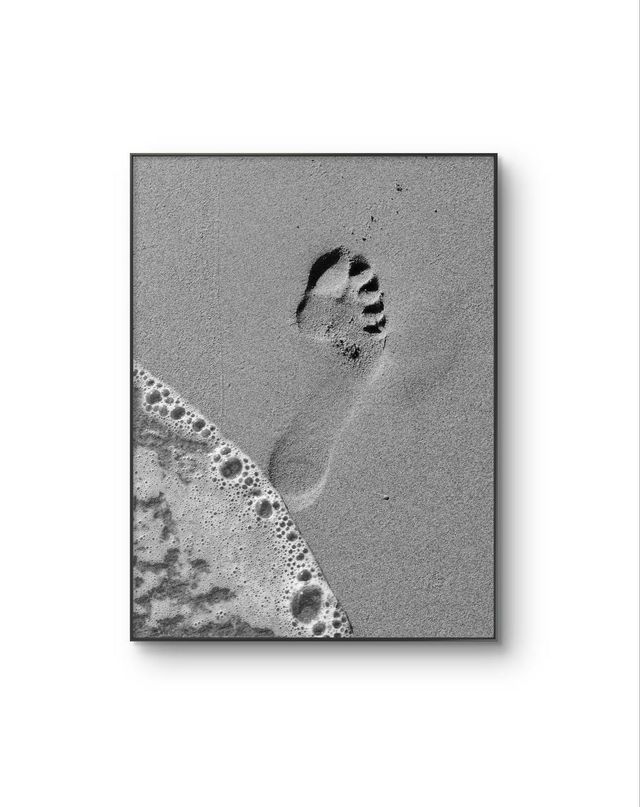
Fading Steps
Serena
Black & white photography · Edition of 25 · Signed
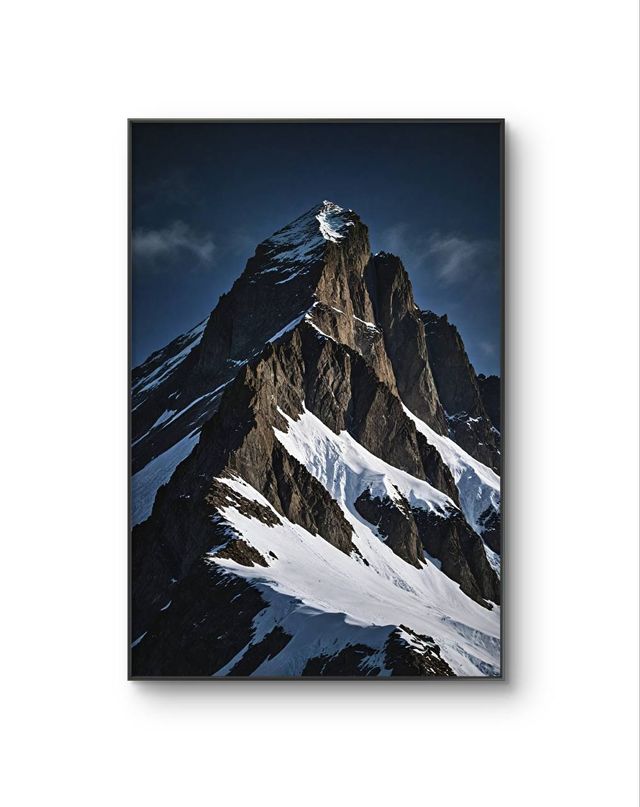
The Sentinel of Ice and Rock
LumièreVue
Colour photography · Edition of 25 · Signed
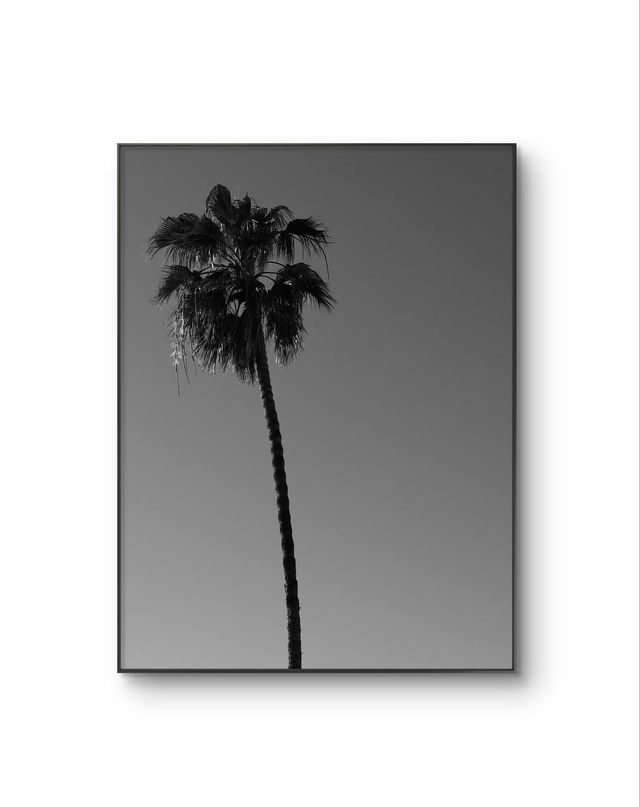
Solitary Palm
Serena
Black & white photography · Edition of 25 · Signed
Listed on ArtMarket, our commercial partner. Edition details and pricing are on their site.
Continue reading
- Starting an Art Collection on a Small BudgetYou do not need thousands to start collecting. Where the €50–€500 band actually is in France, how to give a collection a spine, and what to avoid early.
- Limited Edition Prints Explained: What 1/9 Actually MeansThe fraction on a print is the single most important thing on it. What edition numbers mean, where the signature goes, and what AP and EA are for.
- How to Start Collecting Photography: A Practical GuideWhat makes a photograph collectable, the print processes worth knowing, where to look in France, how to give a collection a thread and how to buy online.