Published · 6 min read
How to Choose Art for Your Home: Wall, Scale and Mood
Start from the wall, not the artist: scale against furniture, mood room by room, colour or black and white, light, framing costs and living with a work first.
Most advice about choosing art starts with artists, movements and names. For a home, that is usually the wrong end. The useful question is not which artist you want but what a particular wall, in a particular room, can hold — and what you want to feel when you walk past it twenty times a day.
Start from the wall, not the artist
Before looking at a single image, choose the wall. Stand in the room at the times you actually use it and note three things: how far away you usually are when you see that wall, what sits in front of or below it, and what the light does across the day. A wall seen from a sofa three metres away asks for something that reads at a distance — a strong shape, a clear contrast. A wall beside a desk or along a corridor, seen from close up, can take something quieter and more detailed.
Scale: where most choices go wrong
The usual mistake is buying too small for the wall, rather than too large. Two proportions from the hanging guide are worth applying at the choosing stage, not only on the day you pick up the drill:
- About two thirds of the furniture's width. Above a sofa, sideboard or bed, the work — or a group treated as one block — should cover roughly two thirds of the width of the piece beneath it. Over a two-metre sofa, that means a composition around 130 cm wide.
- 15 to 20 cm above the furniture. That fixes the bottom edge. With the centre of the work at 145–150 cm from the floor, it also gives you a rough idea of how tall the work can be.
Measure the space, then mark it out on the wall with masking tape or a sheet of paper cut to size. It is the cheapest test there is, and it corrects the instinct to buy small almost every time.
Small works are not the problem; an isolated small work on a large wall is. If you love something at 40 × 30 cm, the answer is not to give it up but to choose its place accordingly: a narrow wall, a spot seen from close up, or a group of several. Remember too that a mat and frame add to the visible size, so the paper size is not the size on the wall. Where a larger format exists — for the photographs mentioned below, a 60 × 40 cm print made to order — a bigger wall is a good reason to consider it.
Mood and subject, room by room
There are no rules here, only tendencies worth knowing.
- Living room. The room where a work is seen most, by the most people, and usually from furthest away. It can carry something with energy and a strong composition.
- Bedroom. The first and last thing you see each day. Many people prefer something calm here, and find that a tense or aggressive image wears on them faster than they expected.
- Hallway and entrance. Seen in passing, briefly, from close up. A good place for small works and for images that reward a second glance.
- Dining room. Seen seated, so the hanging guide drops the centre to about 140 cm. A work that starts a conversation belongs here more than anywhere.
Three works from ArtMarket, the shop this site links to, show how differently subjects sit in a room. Fading Steps by Serena is described in its listing as a single footprint in the sand being erased by an incoming wave, in monochrome: a slow, quiet image of the kind many people want in a bedroom. The Clash of Titans by LumièreVue shows, according to its listing, the ocean hurling itself against jagged cliffs beneath a storm-laden sky — the opposite register, and a candidate for a living-room wall that needs presence. Endless Horizon, also by LumièreVue, is one of the few colour works in that selection: a deep blue sea under a sky in delicate pastels, in the listing's own words.
Colour or black and white
A colour work enters into a conversation with the room; a monochrome one mostly stays out of it. Black and white sits with almost any palette, survives a repaint and moves easily from one room to another, which makes it a forgiving choice for a first purchase.
With colour, there are two approaches that work. Either the work picks up one colour already present in the room — not necessarily the sofa: a rug, a cushion, the wood of a floor — or it deliberately stands apart from everything around it. What rarely works is a near-match, which reads as an accident. An image like Endless Horizon, all blues and pastels, will look different in a pale, cool room than against warm, saturated walls; neither is wrong, but it is worth imagining both before deciding.
Check the light on the wall
Paper and direct sun do not mix. Sunlight is the main cause of fading, the damage is irreversible, and UV glazing slows it without stopping it. If the only available wall gets sun for part of the day, either choose a different wall or choose something you would be content to replace. This site's hanging guide lists the other walls to rule out — above a radiator or a fireplace in use, bathrooms and kitchens, cold exterior walls in older buildings.
Budget the frame as part of the price
Prints commonly ship rolled and unframed. The ArtMarket photographs are a case in point: 40 × 30 cm prints on premium photographic paper, hand-signed in editions of 25 with a signed certificate, at €65 or €95, sent rolled in a tube from the Netherlands, with delivery to France at €18. They arrive ready to frame, not ready to hang.
As this site's budget guide points out, conservation framing — acid-free mat, UV glazing, a decent moulding — frequently costs more than an affordable print did. That is not a reason to avoid the print; it is a reason to count the frame in the price from the beginning. If money is tight, the order of priority stays the same: acid-free mat first, then glazing, then the moulding, which is the one part you can upgrade later without touching the work.
Live with it before you commit
A first impression on a screen is a poor guide to living with an image for years. Before buying, look at the work at the size it will actually be, on the wall where it will actually hang: tape up a paper rectangle of the framed dimensions and leave it for a few days. If you keep noticing the empty rectangle and wishing the picture were there, that is a better signal than any amount of scrolling.
Some online shops offer a return window, but conditions vary, particularly for anything printed to order. Check the seller's terms before buying rather than after.
Why liking it beats matching the sofa
The sofa will be replaced long before the work is. A picture chosen to match the furniture becomes decoration, and it loses its reason for being there the day the room changes. A picture chosen because you like it keeps that reason through every move and every repaint.
The wall, the scale and the light are constraints, and they are worth respecting. Within them, the choice should be yours and nobody else's. The simplest test is to ask whether you would still want the work on your wall if you moved house tomorrow. If the answer is yes, the room will adapt to it.
Works mentioned in this guide
Signed, limited-edition photographs listed on ArtMarket, our commercial partner — for when the reading turns into wanting a real print.
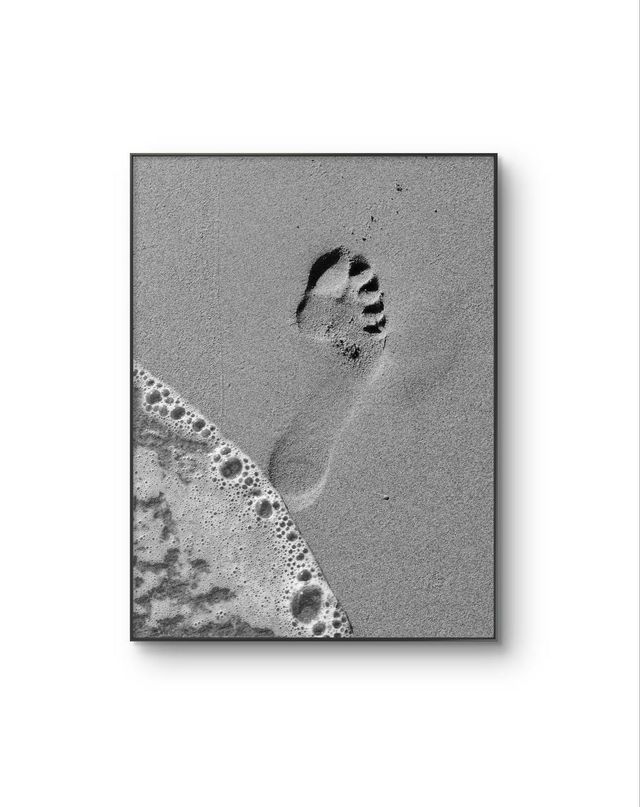
Fading Steps
Serena
Black & white photography · Edition of 25 · Signed
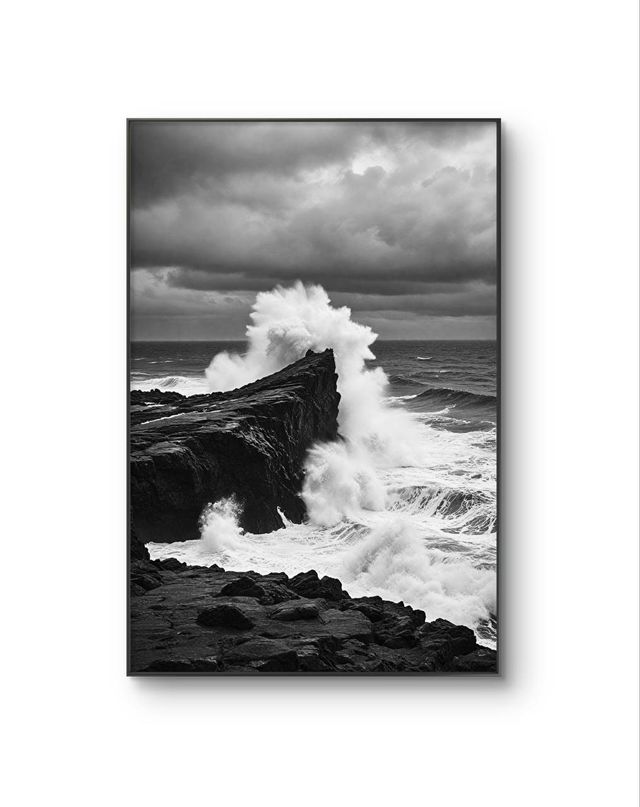
The Clash of Titans
LumièreVue
Black & white photography · Edition of 25 · Signed
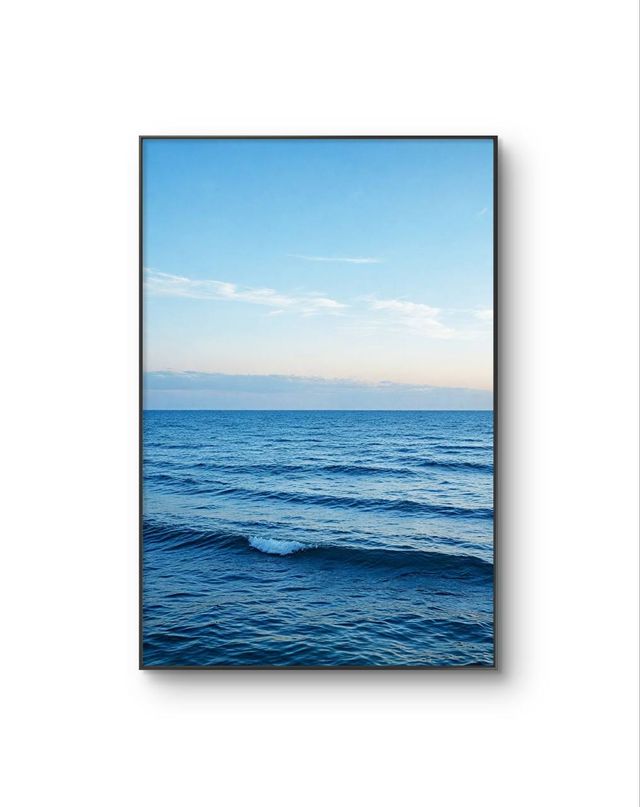
Endless Horizon
LumièreVue
Colour photography · Edition of 25 · Signed
Listed on ArtMarket, our commercial partner. Edition details and pricing are on their site.
Continue reading
- How to Start Collecting Photography: A Practical GuideWhat makes a photograph collectable, the print processes worth knowing, where to look in France, how to give a collection a thread and how to buy online.
- Art for a Mediterranean Home: Light, Walls and SubjectsSouthern light, sea air, lime-washed walls and houses shut for the winter: how to choose, place and protect art in a Mediterranean home.
- How to Choose the Right Size of Artwork for Your WallMeasure the wall, relate the work to the furniture, count the mat and frame, test with paper — a practical method for choosing the right artwork size.