Published · 6 min read
Art for a Mediterranean Home: Light, Walls and Subjects
Southern light, sea air, lime-washed walls and houses shut for the winter: how to choose, place and protect art in a Mediterranean home.
A house in the south of France asks different things of the art on its walls. The light is stronger and lasts longer, the walls are often thick and pale, the windows are sometimes shuttered for half the day, and a good number of these houses stand empty for months at a time. None of this rules anything out, but it changes where a work should hang, how it should be framed, and which images will hold their own in a room that is already full of light and colour.
The light is the main risk
For anything on paper — photographs, prints, drawings, watercolours — the first concern in a southern home is light. Fading from direct sun is cumulative and cannot be undone, and a wall that catches the afternoon sun through a south- or west-facing window receives a great deal of it over a summer. The general rule applies with more force here than further north: keep works on paper off any wall that takes direct sun, at any time of day.
A few practical habits follow from that:
- Watch the wall for a full day before hanging. A patch of sun that crosses a wall for an hour in the late afternoon is easy to miss in the morning, and its position shifts with the seasons.
- Use UV-filtering glazing for anything on paper that you care about. It slows fading; it does not stop it, and it is not a reason to hang a print in the sun.
- Use the shutters and the house. Many southern houses are built to keep light out in the hottest hours. Corridors, stairwells, the inner wall of a living room and rooms facing north are often the best places for photographs.
- Rotate. If you own more than you can hang, give each work a spell in a drawer, flat and in the dark.
Heat, humidity, sea air and the empty winter
General conservation practice is simple to state: paper and photographs are most comfortable at 18–22 °C and 40–60% relative humidity, and they dislike rapid swings more than any single figure. A lived-in room usually stays close to that. What strains it in the south is the combination of summer heat, humid coastal air, and — above all — the second home that is closed up and unheated through the winter.
A few cautious precautions are widely recommended rather than guaranteed:
- In a house left empty for months, favour internal walls over cold exterior ones, where condensation can form behind a frame. Small cork pads on the lower corners leave an air gap.
- In a coastal home, keep works away from windows that are regularly left open to the sea, and choose a well-sealed frame with a backing that closes the package properly.
- If you are unsure how a room behaves over the winter, an inexpensive hygrometer left there for a season will tell you more than any rule of thumb. Where the figures swing widely, hang something you would not mind replacing, and take the works on paper home with you.
Lime-washed walls and old plaster
Southern interiors are often plastered, lime-washed or rendered over stone, and the surface can be softer and more crumbly than it looks. Our guide to hanging art at home covers French wall types and fixings in detail; the short version for older southern walls is to drill without hammer action first, expect to meet stone behind the plaster, and spread the load across two fixings rather than trusting one. Where a wall is too fragile or too precious to drill, a picture rail or a frame leaned on a deep shelf or a stone ledge is a perfectly good answer.
Pale lime walls are also forgiving backgrounds. They take a dark frame well, and they make black and white photographs look deliberate rather than austere.
Subjects that suit, without a theme
The sea, the shoreline, open sky, palms and the quality of southern light are natural subjects for a Mediterranean interior, and there is no reason to avoid them. The risk is the house that becomes a theme: shells on the shelves, boats on every wall, and art that repeats the view from the window instead of adding to it. One or two works on these subjects, chosen as well as anything else in the house, do more than a dozen.
A few examples from the photographs on ArtMarket, the shop this site links to, show the range such subjects can cover:
- Solitary Palm (Serena): a lone palm against an endless sky, its silhouette stark in monochrome, with the light and shadow picking out the texture of the trunk and the fronds.
- Fading Steps (Serena): a single footprint in the sand as an incoming wave erases it — a monochrome study of grainy sand against soft, foamy water.
- Ocean's Lament (Serena): sunrays piercing heavy clouds over a restless ocean, with gentle waves on the shoreline, in black and white.
- Endless Horizon (LumièreVue): one of the few colour works in the collection — a deep blue sea running to a horizon where a pastel sky blends into it.
All are hand-signed photographs in editions of 25, 40 × 30 cm as standard, with a signed certificate stating the edition number. They are shipped unframed, rolled in a tube, so framing — and the choice of UV glazing — is yours to make for the room they will hang in.
Black and white against saturated light
In a room full of strong light, painted shutters, terracotta floors and blue beyond the window, a colour image has a great deal to compete with. Black and white steps out of that competition. A monochrome sea or palm keeps the subject but drops the colour, so it reads as a counterpoint to the room rather than one more patch of blue and ochre. It also sits easily on white or pale lime walls, with a simple black or natural wood frame.
Colour works well too, but it tends to be happiest where the room is calmer: a shaded inner wall, a bedroom with the shutters half drawn, a corridor. There, a soft blue horizon brings the sea indoors without shouting over it.
The Mediterranean art cities
If you are furnishing a house in the south, the region's own art cities are worth the detour, both for looking and for buying.
- Marseille mixes street art with Provençal tradition. The MuCEM stands on the waterfront, La Friche la Belle de Mai occupies a former tobacco factory, and the façades of Cours Julien are constantly repainted by street artists. Art-O-Rama is among the events listed for the city.
- Nice is the city of Riviera light that drew Matisse and Chagall. The Musée Matisse and Musée Chagall sit on the Cimiez hill, a few minutes from the MAMAC in the centre.
- Aix-en-Provence is Cézanne's city, with his preserved studio at Les Lauves, the Musée Granet and the Fondation Vasarely, and the Montagne Sainte-Victoire he painted again and again.
- Montpellier pairs the Musée Fabre, with its Courbets and Delacroix, with the contemporary MO.CO. and La Panacée, and contemporary galleries in the lanes of the Écusson.
- Toulon combines naval history and Mediterranean light, with the Musée d'Art de Toulon and the Hôtel des Arts.
- Perpignan brings Catalan energy, the Musée Hyacinthe Rigaud and the Palais des Rois de Majorque, and hosts Visa pour l'Image.
Each of these has its own page on this site, with the galleries and museums we list for it.
In short
Hang works on paper out of direct sun, behind UV glazing, on internal walls where possible. Take the empty winter and the sea air seriously in a second home. Fix carefully into old plaster, or avoid drilling altogether. And let the sea and the light into the art by choice, not by default — one well-chosen black and white seascape on a pale wall says more about the south than a room full of boats.
Works mentioned in this guide
Signed, limited-edition photographs listed on ArtMarket, our commercial partner — for when the reading turns into wanting a real print.
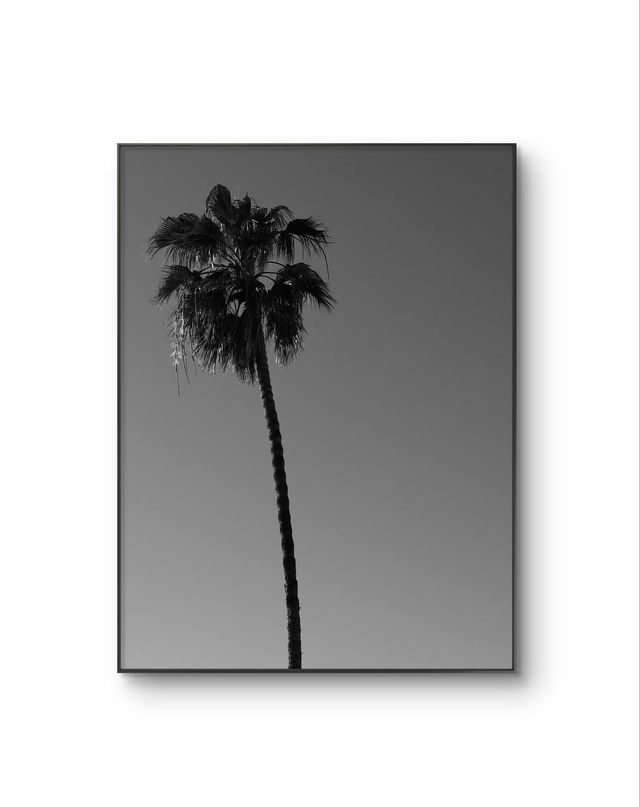
Solitary Palm
Serena
Black & white photography · Edition of 25 · Signed
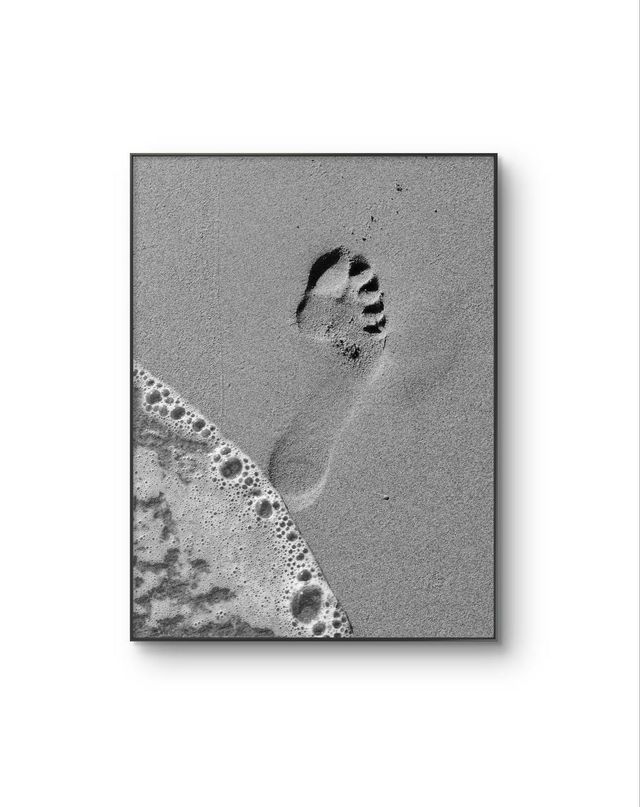
Fading Steps
Serena
Black & white photography · Edition of 25 · Signed
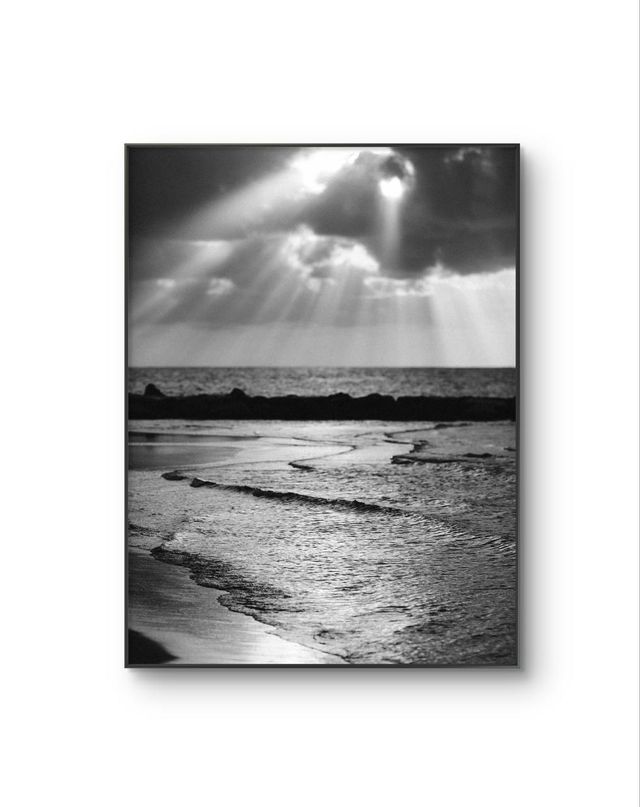
Ocean's Lament
Serena
Black & white photography · Edition of 25 · Signed
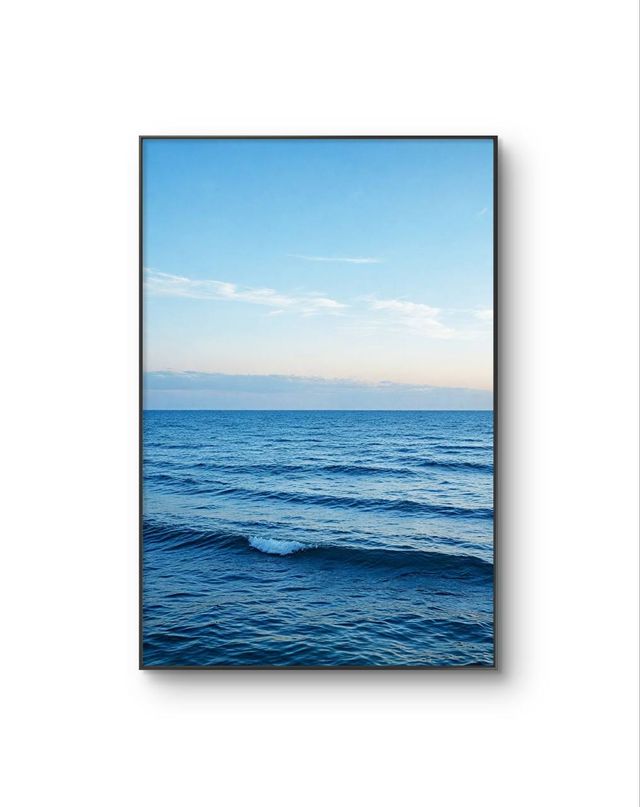
Endless Horizon
LumièreVue
Colour photography · Edition of 25 · Signed
Listed on ArtMarket, our commercial partner. Edition details and pricing are on their site.
Continue reading
- How to Choose Art for Your Home: Wall, Scale and MoodStart from the wall, not the artist: scale against furniture, mood room by room, colour or black and white, light, framing costs and living with a work first.
- How to Choose the Right Size of Artwork for Your WallMeasure the wall, relate the work to the furniture, count the mat and frame, test with paper — a practical method for choosing the right artwork size.
- How to Hang Art at Home: Height, Light and GroupingHanging height, the walls to avoid, how to light a print without cooking it, and how to build a group that holds together — plus fixings for French walls.