Published · 8 min read
Buying Art Online Without Regretting It
What a photograph cannot tell you, what a listing must state, and how art actually travels. The practical checks before you pay, and what to do on delivery.
Buying art online removes the two things that used to make buying art difficult: the intimidating room, and the limit of what happens to be for sale within travelling distance. It replaces them with a narrower problem. You are judging a physical object from a photograph of it, and photographs are very good at hiding exactly the things that determine whether you will still like the work in a year.
What a photograph cannot tell you
Scale. This is the most common regret by a wide margin, and it is entirely avoidable. A work photographed alone on a white background has no size at all — your eye supplies one, and it is usually wrong. Before you buy, measure the piece out on your actual wall with masking tape. It takes two minutes and it has talked more people out of the wrong purchase than any amount of deliberation.
Surface. Whether a painting is thick or thin, matte or glossy, varnished or raw, is nearly invisible in a straight-on photograph and is a large part of how the work reads in a room. Ask for a raking-light shot or a detail at an angle. Any seller who photographs their own stock can produce one.
Colour. No two screens agree, and yours is not calibrated. Whites drift warm or cold, blacks block up, and subtle tonal work suffers most — which is precisely why monochrome photography, where the entire content is tonal range, is both the safest thing to buy online and the easiest to be disappointed by if the seller's images are careless.
What the listing has to state
If any of these are missing, ask. If the answer is vague, that is the answer.
- Exact dimensions in centimetres, and whether they include a border or a frame.
- Medium and support — the specific one. "Digital print on art photographic paper" is a description; "print" is not.
- Edition size and number, for anything printed, plus whether it is signed and where.
- Year of the work, and for prints the year of that particular printing.
- Whether it ships framed — assume not, because it usually is not.
- What documentation comes with it: an invoice describing the work, and a certificate where the price warrants one.
The works this site links to are a reasonable benchmark for what a complete listing looks like: 40 × 30 cm, premium photographic paper, edition of 25, hand-signed, a signed certificate stating the edition number, shipped rolled in a tube without a frame. Every one of those is a checkable fact rather than an adjective.
How art actually travels
Works on paper ship rolled in a cardboard tube, not flat. This surprises first-time buyers who expected a flat parcel and worry that something has gone wrong. It has not: a tube protects the surface far better than a flat pack, which arrives creased at the corners more often than anyone admits.
What it means practically is that the print will arrive curled and you cannot frame it that day. Unroll it on a clean flat surface and leave it a day or two under even weight — an acid-free board with books spread across it, never books directly on the image. Never apply heat to speed this up; a hairdryer or an iron will damage the ink or emulsion permanently.
Stretched canvases and framed work ship flat and boxed, cost considerably more to send, and are the case where you should ask specifically about insurance.
Delivery, borders and who pays
Within the EU, delivery is a straightforward parcel: no customs, no import charges. Typical transit for a tube is a few days — the shop this site links to quotes two to three days across European countries, with free shipping above €200, which at print prices means roughly three works rather than one.
Buying from outside the EU is where the surprises live. Import VAT and a carrier handling fee can be charged on arrival, and they are charged to you, not the seller, unless the listing explicitly says duties are prepaid. Ask before ordering rather than at the door.
Whoever you buy from, check the packaging is described somewhere. "Sent rolled in a tube" is a commitment. Silence on the subject usually means a flat envelope.
Paying, and what recourse you have
Pay by card or through a platform's own checkout. Both give you a documented transaction and a route to dispute it. A request to pay by bank transfer to a personal account, or by any method with no reversal mechanism, is the single clearest warning sign in online art sales and it is worth treating as disqualifying regardless of how convincing everything else looks.
Read the returns policy before you buy, not after. Distance selling in the EU generally gives consumers a withdrawal period for online purchases, but the specifics — who pays return shipping, what condition the work must be in, whether commissioned work is excluded — vary by seller and are exactly the details that matter when you need them. If a seller has no returns policy at all, that is information.
On arrival
Photograph the package before opening it, and photograph the work as it comes out. It takes thirty seconds and it is the entire difference between a straightforward claim and an argument if something arrived damaged.
Check the piece against the listing: dimensions, edition number, signature, condition. Then check the paperwork is there and matches. Report any problem immediately — most sellers handle transit damage well, and almost all of them handle it worse three weeks later.
The warning signs, briefly
Stock photography instead of images of the actual object. No dimensions, or dimensions "approximate". A "limited edition" running to several hundred. A signature that appears inside the image rather than applied by hand. Original prices crossed out with no explanation of what the higher figure was — a reduction is a seller's decision, never a valuation. Pressure to decide today. And any seller who answers a specific question with a general reassurance.
Discover similar artwork
Signed, limited-edition photographs listed on ArtMarket, our commercial partner — for when the reading turns into wanting a real print.
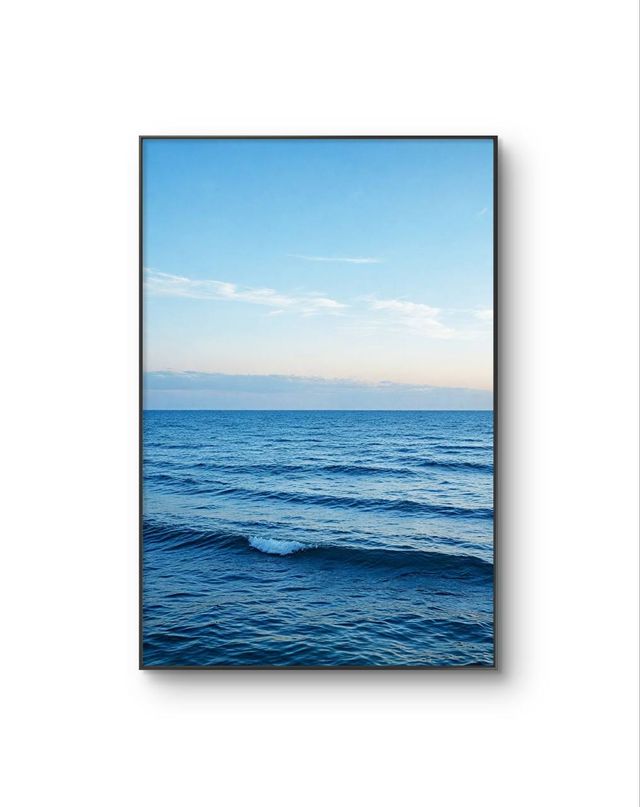
Endless Horizon
LumièreVue
Colour photography · Edition of 25 · Signed
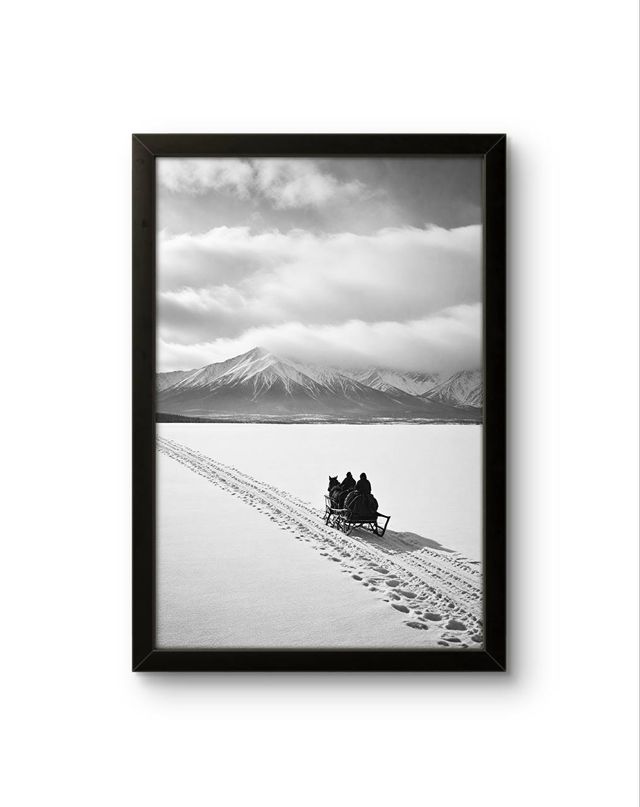
Journey Through the Winter Silence
Bonaque
Black & white photography · Edition of 25 · Signed
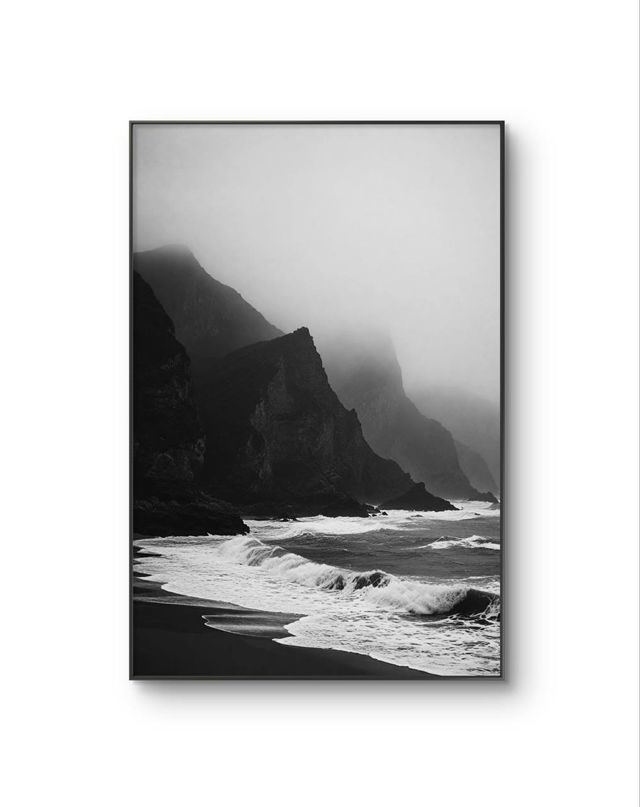
Shrouded in Mist
LumièreVue
Black & white photography · Edition of 25 · Signed

The Last Light on the Peak
LumièreVue
Colour photography · Edition of 25 · Signed
Listed on ArtMarket, our commercial partner. Edition details and pricing are on their site.
Continue reading
- Original or Limited Edition? How to Choose What to BuyUnique work, numbered edition or open reproduction: what each one is, how each is priced, what paperwork to expect, and which suits your budget.
- Limited Edition Prints Explained: What 1/9 Actually MeansThe fraction on a print is the single most important thing on it. What edition numbers mean, where the signature goes, and what AP and EA are for.
- How to Choose Art for Your Home: Wall, Scale and MoodStart from the wall, not the artist: scale against furniture, mood room by room, colour or black and white, light, framing costs and living with a work first.