Published · 6 min read
Black and White Photography Prints: How to Choose One
What separates a black-and-white art print from a poster: print processes, paper, tonal range, edition and signature, size and framing, explained simply.
A black-and-white photograph lives or dies on its print. With no colour to carry the image, everything rests on the blacks, the whites and the long run of greys between them. Two prints of the same picture can look like different works, which is why it pays to know what you are looking at before you buy.
Art print or poster?
A poster is printed in large numbers, usually on thin paper with process inks, and is priced as decoration. A photographic art print is made one at a time on archival paper, in a capped edition, and signed. The image can be the same; the object is not. When a listing gives no edition size, no paper and no signature, assume you are looking at a reproduction.
The print processes you will meet
- Gelatin silver print. The traditional darkroom print, made on light-sensitive paper. It is the reference for deep, neutral blacks and is mostly found in vintage and specialist work.
- Pigment (inkjet) print. The standard for contemporary photography: pigment inks on archival paper, often called a fine art or giclée print. A good pigment print on quality paper is stable for many decades under normal home conditions.
- Platinum-palladium and other historic processes. Rare, hand-made and with a soft, wide tonal range. You will mostly see them in galleries and at fairs.
Paper changes the picture
Matte papers give soft, deep shadows with no reflection, which suits quiet, minimal images. Glossy and baryta papers give richer blacks and more contrast, which suits dramatic skies, seascapes and architecture. Neither is better; ask which paper was used and look at the image with that in mind.
Read the tones, not just the subject
Look at the darkest and lightest parts of the image. Good black-and-white printing keeps detail in the shadows instead of turning them into flat black, and keeps texture in clouds, foam or skin instead of blank white. A high-contrast style is a choice, not a fault, but the transitions between greys should still be smooth.
Edition, signature, certificate
The three things that make a print collectable are the same for black and white as for colour: a stated edition size, the photographer's signature, and a certificate of authenticity that names the edition. The guides to limited editions and certificates on this site go into each point.
Size and framing
40 × 30 cm and 60 × 40 cm are common formats for contemporary photographic prints and fit most walls in an ordinary flat. A white or off-white mount and a thin black or natural wood frame suit almost every black-and-white image. Keep prints out of direct sunlight and, where possible, frame behind UV-filtering glass.
Three examples
The black-and-white prints listed on ArtMarket show the range of the medium. Serena's Celestial Contrast sets a cumulus cloud against a black sky; her Silent Resistance is a figure in a black suit against a concrete wall, built on hard light and shadow; LumièreVue's The Clash of Titans is a storm sea breaking on cliffs. Each is listed at 40 × 30 cm, signed, in an edition of 25 with a certificate.
Works mentioned in this guide
Signed, limited-edition photographs listed on ArtMarket, our commercial partner — for when the reading turns into wanting a real print.
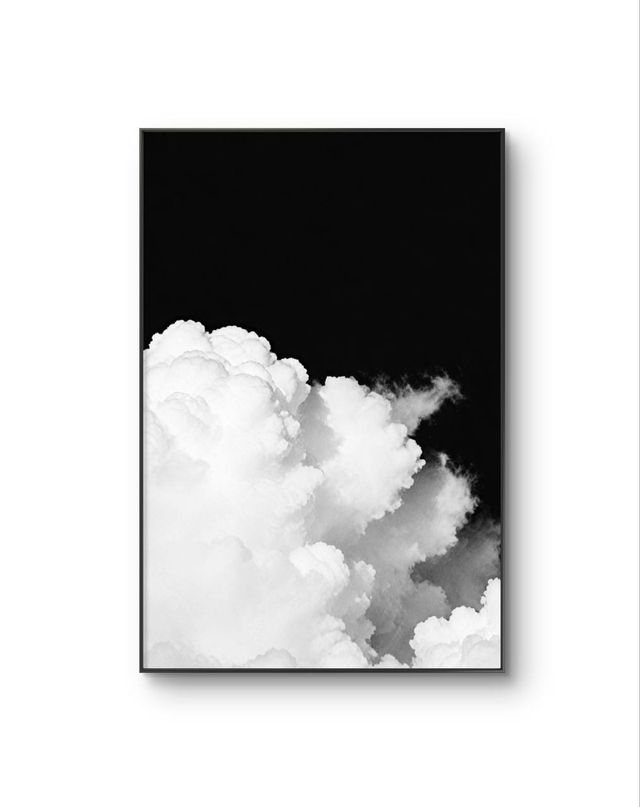
Celestial Contrast
Serena
Black & white photography · Edition of 25 · Signed
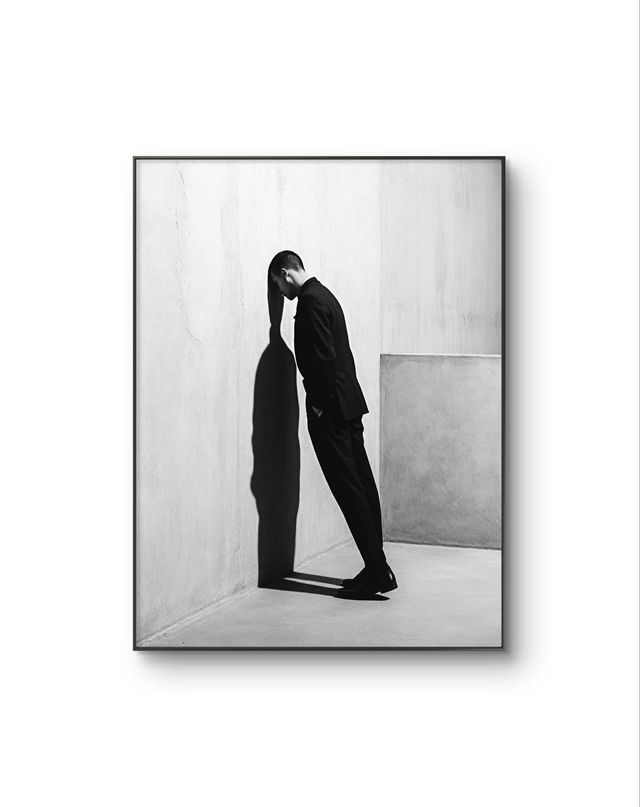
Silent Resistance
Serena
Black & white photography · Edition of 25 · Signed
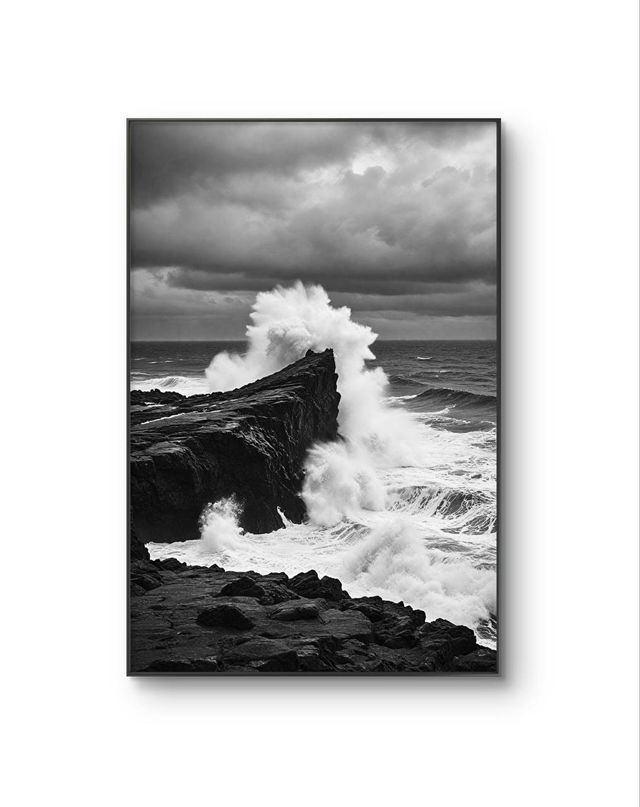
The Clash of Titans
LumièreVue
Black & white photography · Edition of 25 · Signed
Listed on ArtMarket, our commercial partner. Edition details and pricing are on their site.
Continue reading
- How to Frame a 45 × 30 Photography Print: A Practical GuideArt prints ship rolled and unframed. Here is how to flatten, mat, glaze and hang a 45 × 30 photograph without damaging it — and what it actually costs.
- How to Start Collecting Photography: A Practical GuideWhat makes a photograph collectable, the print processes worth knowing, where to look in France, how to give a collection a thread and how to buy online.
- How to Choose the Right Size of Artwork for Your WallMeasure the wall, relate the work to the furniture, count the mat and frame, test with paper — a practical method for choosing the right artwork size.