Published · 7 min read
How to Frame a 45 × 30 Photography Print: A Practical Guide
Art prints ship rolled and unframed. Here is how to flatten, mat, glaze and hang a 45 × 30 photograph without damaging it — and what it actually costs.
Almost every art print you buy online arrives the same way: rolled inside a cardboard tube, unframed. That is the correct way to ship a photograph — it protects the surface far better than flat-packing — but it leaves you holding a curled sheet of paper and a decision. Framing is where most first-time buyers stall, and it is also the single thing that most changes how a photograph reads on a wall.
First: let the paper relax
Do not fight a rolled print. Unroll it on a clean, flat surface and leave it for a day or two under even weight — a sheet of acid-free board with a few books spread across it works. Never place books directly on the image, and never weight one corner and leave the rest free.
If the curl is stubborn, roll the print gently backwards against the curl, loosely, and leave it a few hours before flattening again. What you must not do is apply heat. A hairdryer or a warm iron will cook the emulsion or the ink layer, and that damage is permanent.
Two routes: frame at size, or mat it
A 45 × 30 cm print is a 3:2 rectangle — the classic 35mm proportion. That matters, because it decides how easy your life is about to be.
Framing at size means a frame with a 45 × 30 rebate, image running to the edge. It is tidy and cheap, and it suits a photograph you want to read as an object rather than as a picture in a window. The catch: off-the-shelf frames cluster around 4:3 and 5:4 formats, so exact 3:2 sizes are less commonly stocked than you would expect. You may end up ordering custom, which costs more than the print.
Matting means a larger frame with a mat — a passe-partout — cut to an aperture slightly smaller than the print, so the board overlaps the edges by three to five millimetres and holds the image in place. This is how galleries hang work at this size, and there is a reason: white space around a photograph gives the eye somewhere to rest before it reaches the frame. A 50 × 70 frame with a generous mat gives a 45 × 30 print real presence.
If your print has a white border already — some are printed with a 1 cm margin — you have a third option: mount it so the border shows, and let the paper edge itself be the frame line.
The mat is not the place to save money
Ask for acid-free, sometimes sold as conservation or museum board. Ordinary card contains lignin, which yellows as it ages, and it does not yellow alone — it burns a brown line into whatever it touches. That line follows the mat aperture exactly, and it is not reversible.
Mount the print with acid-free hinging tape at the top edge only, so the paper can expand and contract with humidity. Never use ordinary adhesive tape, never dry-mount a limited-edition print onto board, and never trim a print to fit a frame — the margins are part of what you bought, and cutting them destroys both the edition marking and the value.
Glazing matters more than the frame
This is the part people get backwards. An expensive moulding around unprotected glass does nothing for a print's lifespan; a plain frame with good glazing does a great deal.
Light is what kills photographs. Standard glass blocks very little ultraviolet. UV-filtering glass costs meaningfully more and stops most of it. Acrylic is lighter, does not shatter, and is worth considering for anything large or hung above a bed or a stairwell — but it scratches easily and attracts dust through static.
For monochrome work in particular, watch reflections. A black-and-white photograph carries its meaning in tonal range, and a glare-heavy sheet of glass across a deep black flattens exactly what you paid for. Anti-reflective glazing is expensive, but on a dark image in a bright room it is the difference between seeing the print and seeing yourself.
Where to hang it
Gallery convention puts the centre of the image at roughly 145 to 150 cm from the floor — eye level for most adults standing. In a room where people are usually seated, drop it lower. The common mistake is hanging too high, which is what happens when you align the frame to the furniture rather than to the eye.
Keep the print off any wall that faces direct sun, however good your glazing. Avoid bathrooms and kitchens, where humidity swings and grease travel further than you think. An exterior wall in an unheated room will cause condensation behind the glass; if that is your only option, use spacers so the print does not sit against the glazing.
What it actually costs
Be realistic before you buy: framing a 45 × 30 print properly — conservation mat, UV glazing, a decent moulding — will often cost more than an affordable print did. That is not a reason to skip it. It is a reason to budget for it from the start, rather than leaving a photograph in its tube for six months because the framing quote was a surprise.
If money is tight, the order of priority is clear: acid-free mat first, then UV glazing, then the frame itself. The moulding is the only part of the stack you can upgrade later without touching the print.
Discover similar artwork
Signed, limited-edition photographs listed on ArtMarket, our commercial partner — for when the reading turns into wanting a real print.
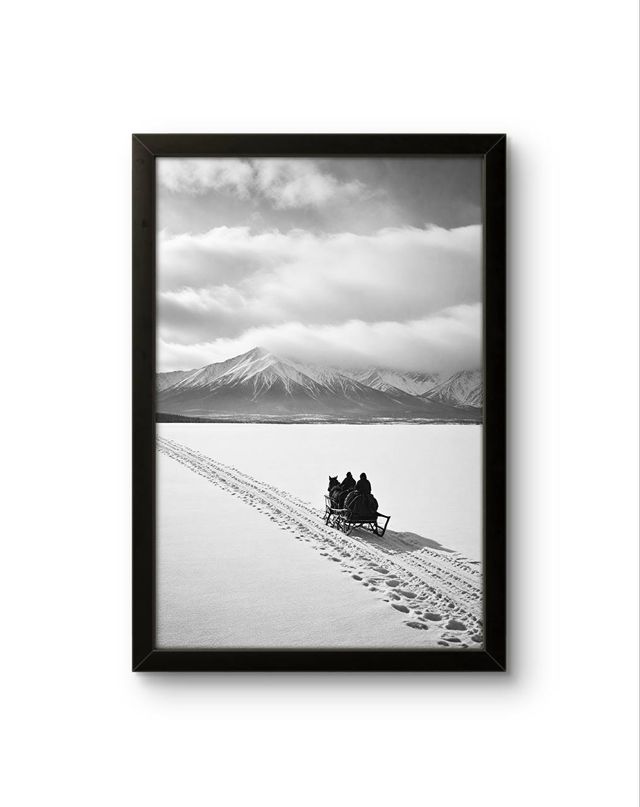
Journey Through the Winter Silence
Bonaque
Black & white photography · Edition of 25 · Signed
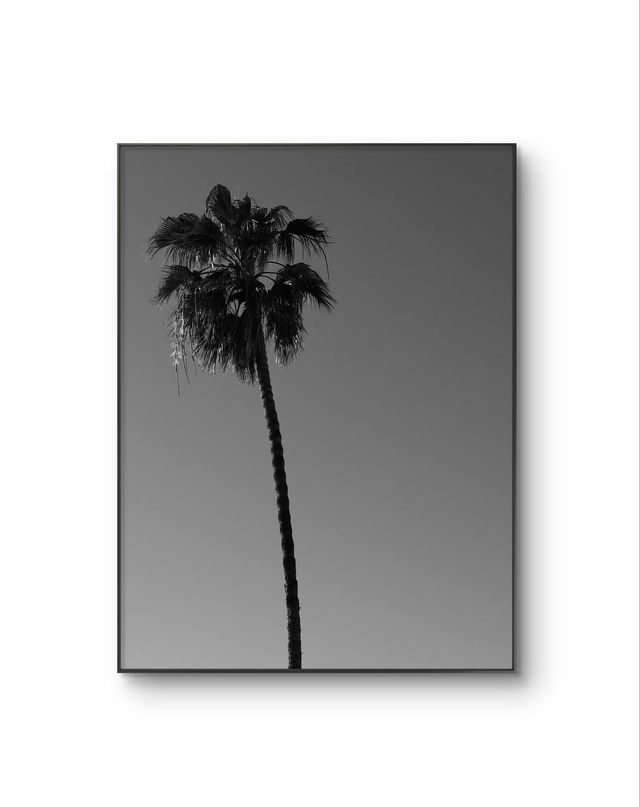
Solitary Palm
Serena
Black & white photography · Edition of 25 · Signed
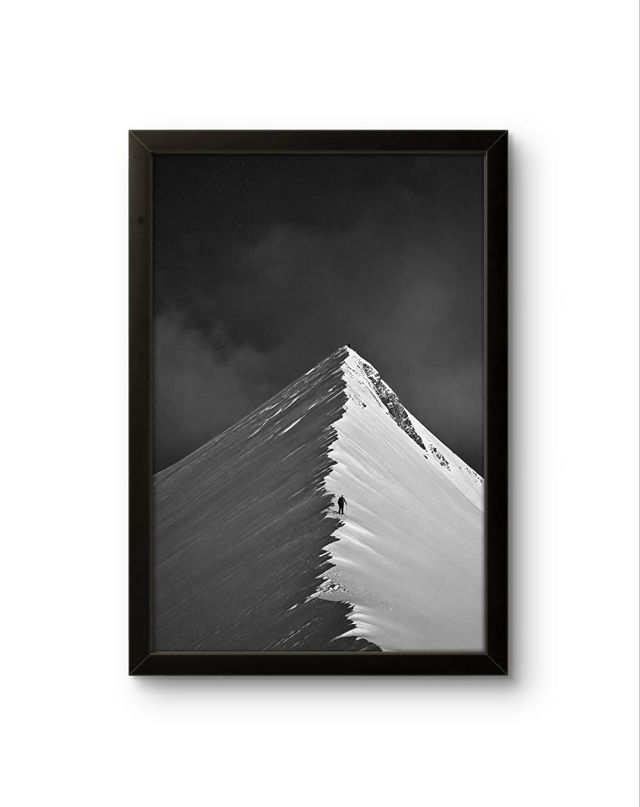
Climbing the Edge of the World
Bonaque
Black & white photography · Edition of 25 · Signed
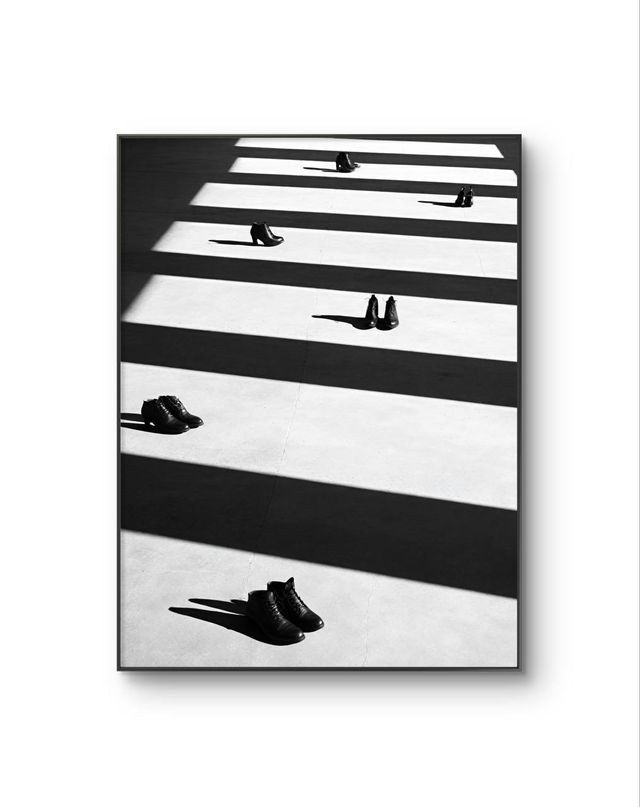
Traces of the Unseen
Serena
Black & white photography · Edition of 25 · Signed
Listed on ArtMarket, our commercial partner. Edition details and pricing are on their site.
Continue reading
- How to Start Collecting Photography: A Practical GuideWhat makes a photograph collectable, the print processes worth knowing, where to look in France, how to give a collection a thread and how to buy online.
- How to Choose the Right Size of Artwork for Your WallMeasure the wall, relate the work to the furniture, count the mat and frame, test with paper — a practical method for choosing the right artwork size.
- Giclée, Lithograph, Screenprint: Print Types ExplainedThe word “print” covers a stone lithograph, a screenprint, an etching, a pigment print and a poster. How to tell them apart, and what each is worth.